

Onboarding that converts
The first five minutes decide whether a trial sticks. We design the path to a user’s first win — the biggest lever on activation.


Powerful software fails when people can’t figure it out. We design SaaS interfaces that make a deep product feel simple — and a reusable design system that keeps it consistent and fast to build as it grows.
In SaaS, the interface is the product. Clarity shows up directly in activation, retention, support load and how many trials convert.
The first five minutes decide whether a trial sticks. We design the path to a user’s first win — the biggest lever on activation.
Feature-rich products drift into clutter. We bring structure, hierarchy and progressive disclosure so power doesn’t become confusion.
Confusing UI generates tickets. Clear interfaces, empty states and in-product guidance quietly reduce the questions you have to answer.
Buyers judge trust by polish. A considered, consistent product signals a company they can rely on with their data and money.
We design for engineering reality — systems, states and specs developers can build from — not just pretty screens that fall apart in code.
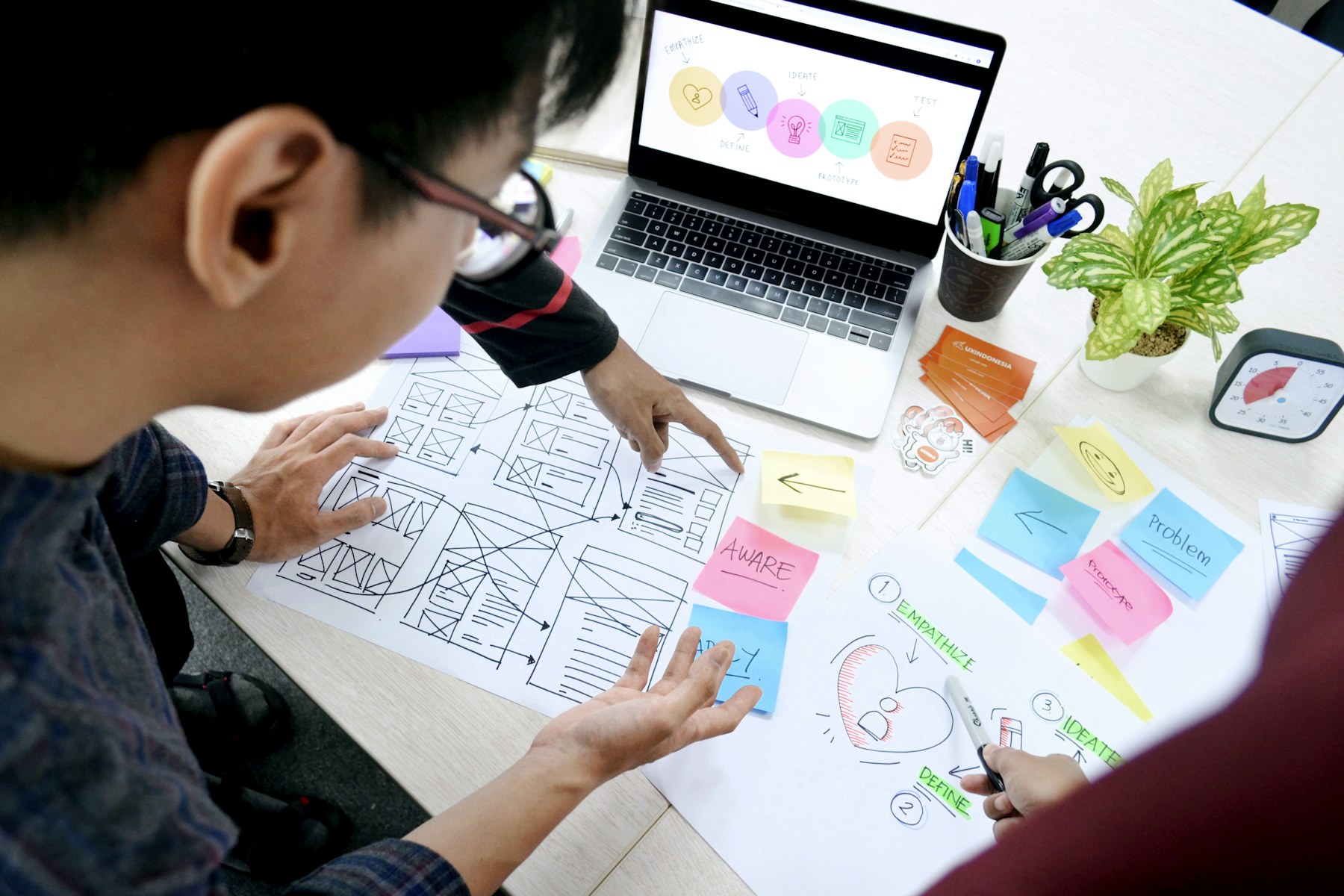
We turn goals and workflows into clear flows and screens — solving the interaction problems before a line of code is written.
A reusable library of components, tokens and patterns so every screen feels the same — and new features are faster to design and build.
Interactive prototypes that let you and real users try the flows early — so we fix the confusing bits in design, not in production.
WCAG-guided design — contrast, keyboard, screen-reader support — so your product works for every user and passes procurement.
A visual language — colour, type, motion — that makes the product feel like you, and distinct from the sea of look-alike SaaS.
Specs, states and tokens engineers can build from directly — and we can implement it too, so the shipped product matches the design.
Design as a build discipline — grounded in real users, delivered as a system, and taken all the way into shipped code.
We learn your users, their jobs and where today’s product trips them up — grounding design in real behaviour, not taste.
We map information architecture and the core journeys, resolving the hard interaction problems before visual design begins.
We build clickable prototypes and put them in front of users, so confusing moments get fixed in Figma, not in a support queue.
We turn the design into a component library with tokens and rules — so it scales consistently and speeds up every future screen.
We refine the details, motion and empty states, and check accessibility — the finish that separates credible products from rough ones.
We hand over dev-ready specs — or build the front end ourselves — so the product your users get matches the product we designed.
Design is easy to underrate until it costs you conversions — here are the questions worth asking first.
Ask us somethingBoth. We can deliver dev-ready design and a system for your team to build, or implement the front end ourselves — which is the surest way the shipped product matches the design.
Yes. We audit the current product, find where users struggle, and modernize the experience — often rolling it out screen by screen so there’s no jarring overnight change.
It’s a reusable library of components, tokens and patterns. Beyond a handful of screens it pays for itself — consistency for users, and far faster design and build for you.
We prototype and test with real users before build, and design to accessibility standards from the start — so usability is validated, not assumed.
It depends on scope — a focused flow, a full product, or a design system. After a short discovery we give a range tied to milestones, and can phase it so value lands early.
Tell us what you are building. We will come back within one business day with questions, not a pitch deck.
Only relevant questions appear as you make selections.