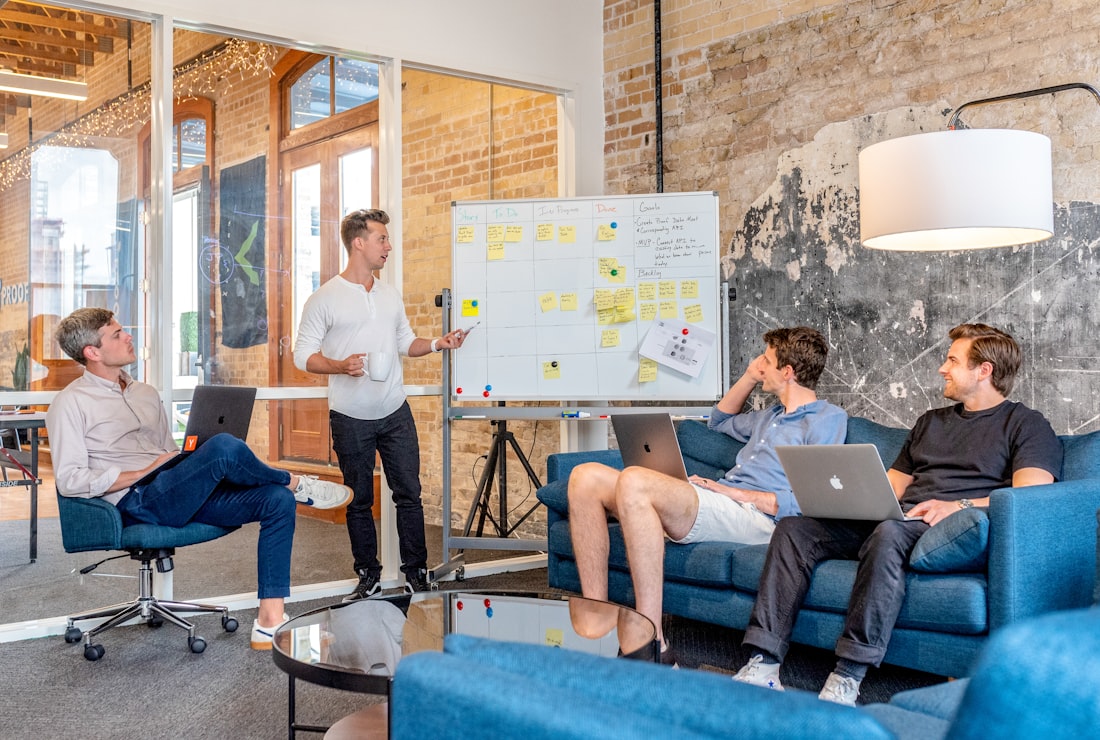


First-time founders
Taking an idea to market for the first time. We help you cut scope to what proves the thesis, and ship something real fast.


An MVP isn’t a throwaway — it’s the first version real users touch. We help you find the smallest lovable product, ship it in 10–16 weeks and build it on foundations you can grow, not rebuild.
An MVP is right when you need to learn from real users quickly — without betting the whole budget before you know it works.
Taking an idea to market for the first time. We help you cut scope to what proves the thesis, and ship something real fast.
You need traction to raise, or something to show investors. A working product with early usage beats a deck every time.
An existing company validating a new product bet without diverting the whole team — ship, measure, decide.
A tool that works for you and might work for others. We build the MVP that tests whether the market agrees.
Small doesn’t mean flimsy. An MVP still needs real auth, real data and a foundation the next release can build on.
We find the smallest version that proves value, agree what’s in and what waits, and sketch the path beyond launch.
We build the one or two journeys that deliver the value, done well — not ten features done thinly.
Sign-up, login, roles and the account plumbing an MVP genuinely needs — secure from the first user, not retrofitted later.
An onboarding flow that gets users to their first win quickly — the single biggest lever on whether an MVP sticks.
Product analytics wired in so you can see activation, retention and where users drop — and steer the next release on data.
A clean architecture and deploy pipeline so version two is an extension, not a rewrite — the discipline most MVPs skip.
A tight, milestone-driven build with working software you can see the whole way through — no black box, no surprise at the end.
We pin down the problem, the user and the one outcome that proves value — then ruthlessly cut everything that isn’t needed to test it.
We prototype the core journeys and pressure-test them with you before engineering, so we build the right thing, once.
We choose an architecture that fits the MVP and scales past it — data model, auth and deploy pipeline decided before feature one.
Senior engineers ship in weekly, testable increments — you use working software throughout, not just at the finish.
We add the security, onboarding and analytics an MVP needs to survive real users — and to tell you what they actually do.
We ship it, watch activation and retention, and turn what you learn into a prioritised plan for the version that follows.
An MVP lives or dies on scope discipline — here are the questions that get it right.
Ask us somethingMost focused MVPs launch in 10–16 weeks. The timeline depends on scope, integrations and how much uncertainty we resolve in discovery — which is exactly why we scope tightly first.
It depends on scope and integrations. After a short discovery we give a range tied to milestones — and part of our job is keeping scope honest so the number stays sensible.
No — that’s the point. We build on a clean, scalable foundation so version two extends the MVP rather than replacing it. Throwaway prototypes are a false economy.
We anchor on the one outcome that proves the idea, keep only what’s needed to test it, and park the rest on a roadmap — so the first release is focused, not featureless.
Yes. Most MVPs turn into an ongoing build — we take what launch teaches us and evolve the product with you, on evidence rather than guesswork.
Tell us what you are building. We will come back within one business day with questions, not a pitch deck.
Only relevant questions appear as you make selections.