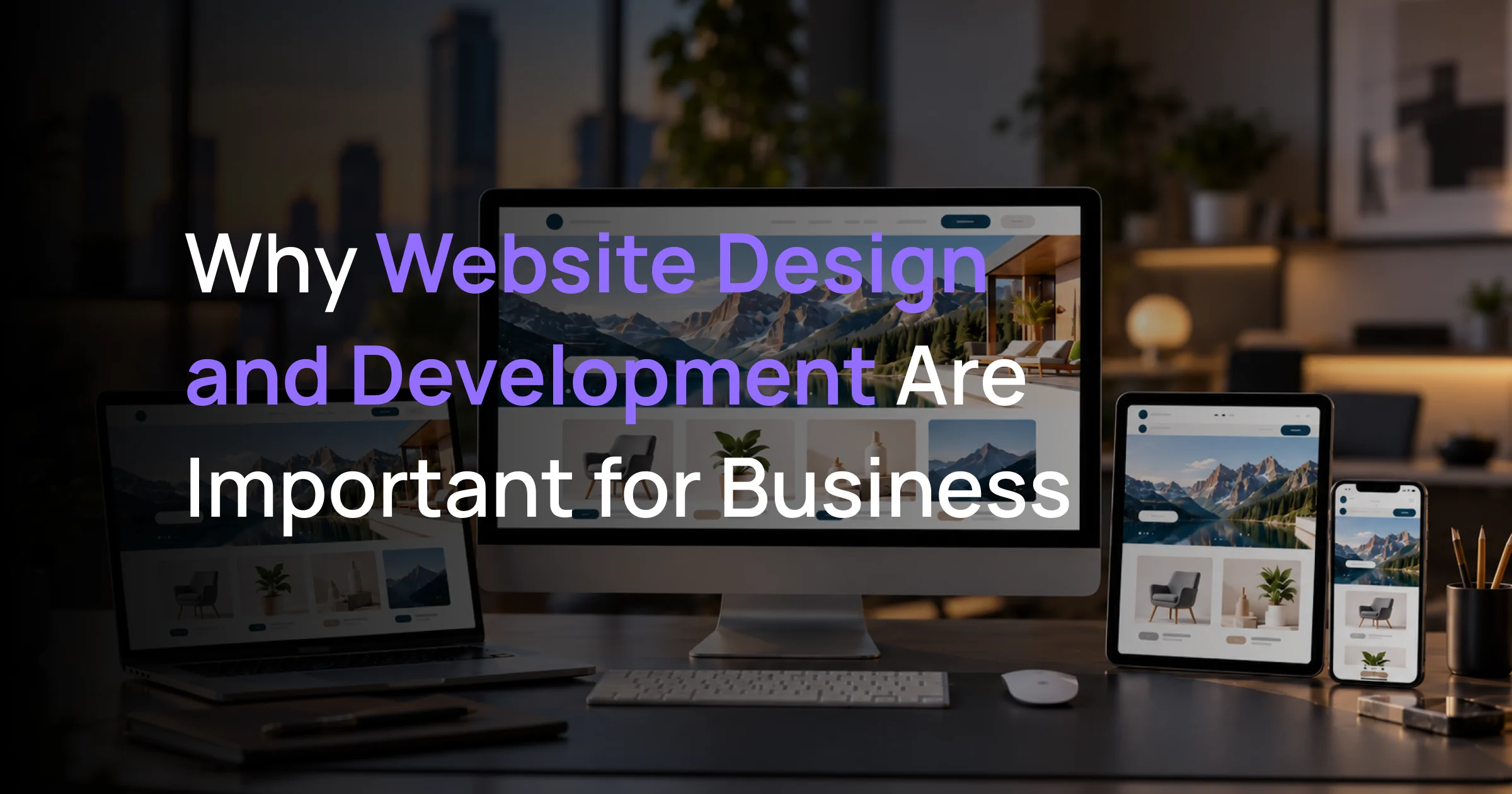
Website design and development play complementary roles in business success. Design shapes how customers perceive a brand and move through its content, while development makes the site’s features, performance, and functionality work reliably. When the two work together, a business gets a more useful online experience that supports customer trust, organic visibility, and lead generation.
This guide explains why each one matters, how they differ, how they combine to support business results, and what to prioritize when you build or rebuild a site.
Why Is Website Design Important for Business?
Website design is important because it is usually a visitor’s first impression of your business. Within moments, people decide whether the site looks credible, whether they can find what they came for, and whether it is worth their time. Good design answers those questions quickly through consistent branding, clear layout, readable content, and accessible interactions.
Builds Trust and Brand Credibility
A consistent logo, color palette, and typography make a business look established. Clear business information, visible contact details, customer testimonials, and a clean, current layout give visitors reasons to trust you before they ever speak to your team. An outdated or inconsistent site does the opposite: it raises doubts about whether the business is active or reliable.
Improves Navigation and User Experience
Visitors should not have to hunt for information. Concise menus, a logical page hierarchy, readable text, and touch-friendly interactions help people reach the right page in a few clicks. Accessible design (sufficient contrast, clear headings, descriptive labels) also widens the audience who can use the site comfortably.
Helps Turn Visitors Into Leads
Design guides what visitors do next. Clear calls to action, service pages that answer common questions, and simple contact options reduce friction between interest and inquiry. For example, shortening a contact form to the fields you truly need, or placing a call to action beside a service description, makes the next step obvious.
Why Is Website Development Important?
Website development is important because it is the technical foundation that makes a site function. Development turns a design into a working website: forms that submit, pages that load quickly, integrations that connect to your tools, and a structure that is secure and easier to maintain over time. A well-designed site that is slow, broken on mobile, or hard to update will still frustrate visitors and cost you leads.
Supports Website Functionality and Reliability
Contact forms, booking tools, payment gateways, CRM connections, and content management all depend on solid development. Reliable behavior means visitors can complete tasks without errors, and your team can update content without breaking the site.
Improves Mobile Responsiveness and Performance
Many visitors arrive on phones, so layouts need to adapt to any screen size. Development choices such as image optimization, clean code, and caching affect how fast pages load, and slow or awkward pages push visitors away before they engage.
Supports Search Engine Crawling and Indexing
Search engines need to discover, crawl, and understand your pages. Crawlable navigation, a logical URL and page structure, accessible content, and sound technical foundations make that possible. Development alone does not guarantee rankings, since content relevance, competition, and authority also matter, but a site that search engines cannot easily read starts at a disadvantage. If search visibility is a priority, see our SEO services and guide to on-page SEO.
How Website Design and Development Contribute to Business Success
Design and development support measurable business outcomes only when they work together. Design decides what visitors see and do; development makes sure it works. A beautiful page with a broken form generates no leads, and a technically flawless site that is confusing to navigate generates few.
Creates a Better Customer Journey
A good site helps visitors move from learning about your business to taking the next step: reading a service page, comparing options, then contacting you or buying. Design makes each step clear, and development keeps each step fast and dependable.
Supports Lead Generation and Conversions
Clear conversion paths, relevant calls to action, trust signals such as reviews, and low-friction forms all contribute. Tracking those paths with analytics lets you see where visitors drop off and improve them over time, rather than guessing.
Makes It Easier to Scale Your Online Presence
A well-planned website can add new services, landing pages, content, and features as your business grows without being rebuilt each time. Planning structure and technology early avoids costly rework later.
Real-World Example: Valley MRI & Radiology
Valley MRI & Radiology shows how design and development work together on a real business goal. The imaging center has served San Joaquin County for more than 35 years, yet its two most important journeys were still handled by phone: patients booking scans, and referring physicians sending orders. The website needed to move both online.
On the design side, we focused the interface on those two actions and cleared everything else out of the way, so a patient or physician can see the next step immediately. That is UI/UX design in service of a specific business outcome rather than visual polish alone.
Development made those actions actually work. We built online scan booking so patients no longer wait on hold to schedule imaging, and a dedicated referral portal so physicians can send orders directly instead of by phone or fax. That is custom web development connecting the site to how the practice operates.
The lesson applies to any business: start from the few actions that matter most to your customers, design the site around them, and build the functionality that lets them complete those actions without picking up the phone. See the full Valley MRI & Radiology case study or visit the live site at valleymri.com.
What Is the Impact of Website Design on Business Performance?
The impact of website design shows up in how easily people can use your site and how much confidence they have in your business. Usability reduces frustration, clear presentation builds confidence, and both make visitors more likely to engage, read further, and get in touch. These are practical benefits rather than guaranteed outcomes: results depend on your audience, offer, content, and traffic. The reliable approach is to design for clarity, measure behavior, and improve based on what the data shows.
Website Design vs. Website Development: What’s the Difference?
Design and development are different disciplines that solve different problems, and most business websites need both.
| Area | Website Design | Website Development |
|---|---|---|
| Main Focus | Visual presentation and user experience | Functionality and technical implementation |
| Typical Work | Layouts, typography, colors, navigation, and interaction design | Coding, forms, integrations, databases, and website functionality |
| Business Contribution | Helps visitors understand and use the website | Makes the website’s features work reliably |
| Shared Goal | A useful, accessible website that supports business objectives | A useful, accessible website that supports business objectives |
What Should Businesses Prioritize in a Successful Website?
Use this checklist when planning a new site or auditing an existing one:
- Clear navigation and page hierarchy
- Responsive design and accessibility
- Fast, reliable performance
- Useful, search-friendly content
- Clear calls to action
- Analytics and conversion tracking
- Ongoing maintenance and security
Online stores should also make checkout simple, show shipping and returns information clearly, and use secure payment methods. Service businesses should make contact options and proof of past work easy to find.
Frequently Asked Questions
Why is website design important for a business?
Design shapes first impressions, trust, and usability. A clear, consistent, accessible site helps visitors understand what you offer and take the next step, which supports the customer journey from first visit to inquiry.
Why is website development important?
Development makes a website work. It supports functionality, reliability, mobile responsiveness, performance, security, and maintainability, so the experience you designed holds up in real use.
How does website design affect business success?
Clear design can increase customer confidence, encourage engagement, and create more opportunities for conversion. It does not promise specific results, but it removes avoidable barriers between visitors and your business goals.
What is the difference between website design and development?
Design focuses on presentation and user experience: layout, visuals, and navigation. Development implements functionality and technical behavior: code, forms, integrations, and performance.
Can website design and development affect SEO?
Yes. A well-structured, accessible, fast, mobile-friendly site supports crawling, indexing, and a good visitor experience. Rankings also depend on content relevance, competition, and authority, so design and development support SEO rather than replace it.
Conclusion
Website design and development are two halves of an effective business website. Design earns attention and trust; development delivers a fast, reliable, search-friendly experience behind it. Together they help visitors become leads and customers, and give you a foundation you can grow. Explore our web development services, read how to prepare your website for AI-driven search, or talk to our team about your project.