


In today’s digital landscape, businesses face a critical decision: how to reach users across multiple platforms without breaking the bank. Enter hybrid mobile app development services, a game-changing approach that combines the best of both native and web applications. According to recent industry data, over 70% of developers now prefer hybrid app development for its cost-effectiveness and efficiency. This comprehensive guide explores everything you need to know about hybrid mobile app development, from understanding the technology to choosing the right development partner for your project.
Table of Contents
What Are Hybrid Mobile App Development Services?
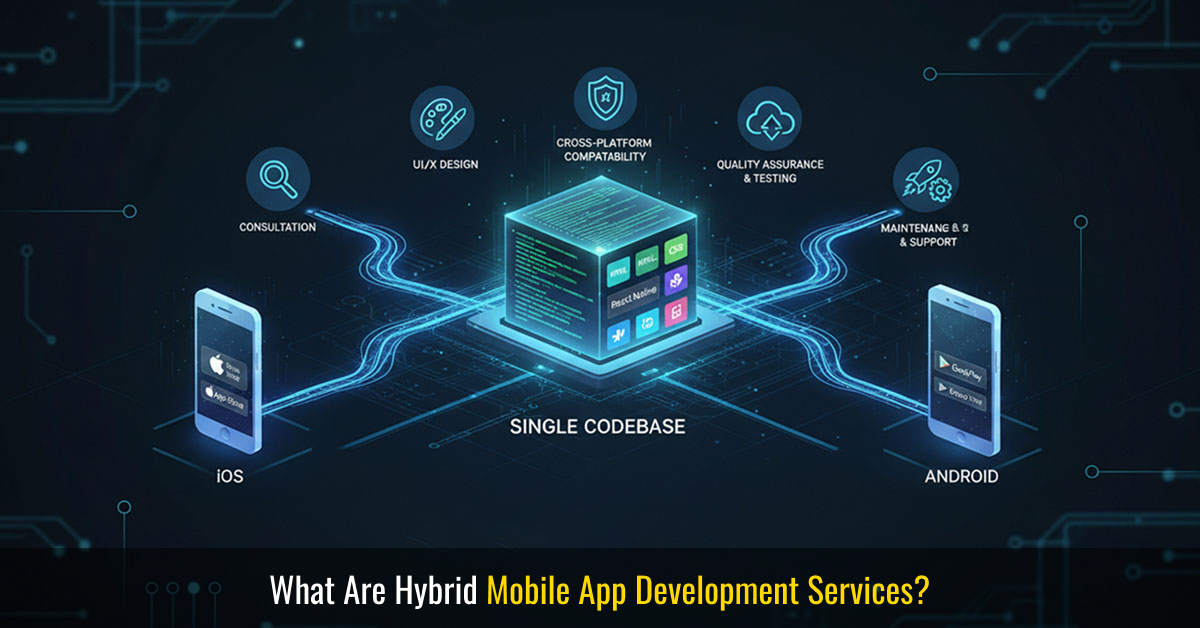
Hybrid mobile app development services encompass the design, development, and deployment of applications that work seamlessly across multiple platforms using a single codebase. Unlike native apps built separately for iOS and Android, hybrid apps use web technologies like HTML5, CSS, and JavaScript, wrapped in a native container that enables them to function like platform-specific applications.
Understanding the Hybrid App Architecture
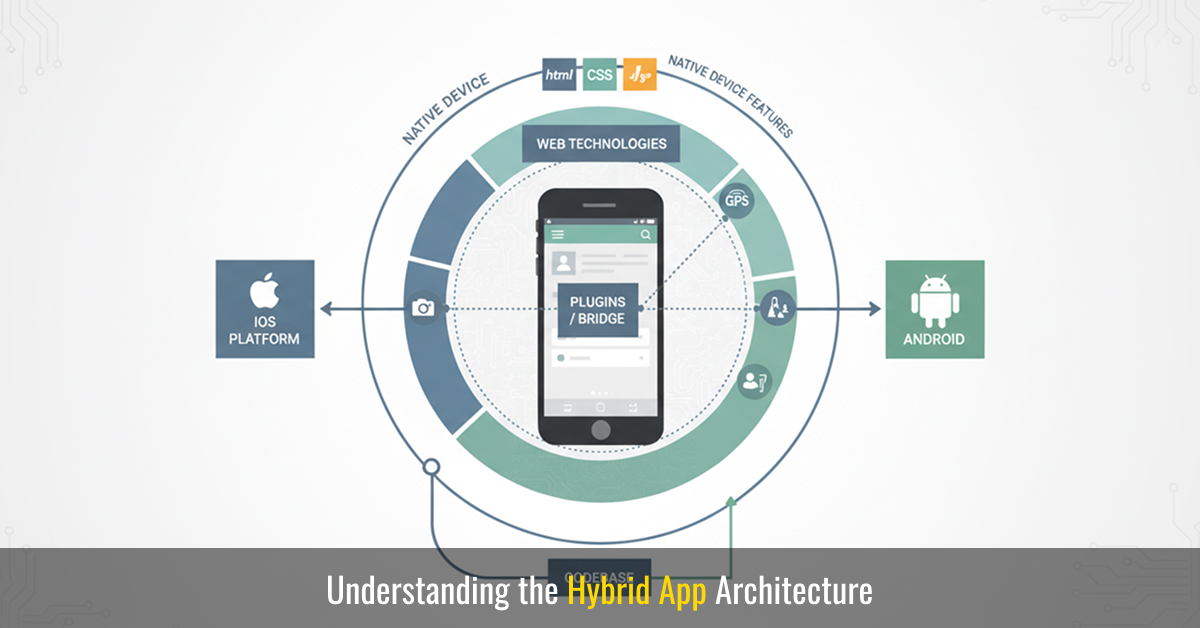
Hybrid apps operate through a sophisticated architecture that bridges web and native technologies. At their core, these applications run within a native WebView, a browser instance embedded in a native app shell. This architecture allows developers to write code once and deploy it across iOS, Android, and even web platforms, dramatically reducing development time and costs. The native wrapper provides access to device features like cameras, GPS, and push notifications, while the web-based core ensures consistent functionality across platforms.
Key Characteristics of Hybrid Mobile Apps
Hybrid mobile apps possess several defining characteristics that make them attractive to businesses:
- Single codebase deployment: Write once, deploy everywhere across iOS, Android, and web platforms
- Native device access: Leverage device hardware features through plugins and APIs
- Offline functionality: Store data locally and sync when connectivity is restored
- Cost-effective development: Reduce development costs by up to 60% compared to building separate native apps
- Faster time-to-market: Launch your app across multiple platforms simultaneously
The Compelling Benefits of Hybrid Mobile App Development

Choosing hybrid mobile app development services offers substantial advantages for businesses of all sizes. Understanding these benefits helps explain why major companies like Instagram, Uber, and Gmail have successfully leveraged hybrid technologies for their applications.
Cost-Effectiveness and Resource Optimization
Perhaps the most significant advantage of cross-platform mobile app development is the dramatic reduction in development costs. By maintaining a single codebase, businesses can cut their development expenses by 50-60% compared to building separate native applications. This cost-effectiveness extends beyond initial development, maintenance, updates, and bug fixes only need to be implemented once, rather than separately for each platform. For startups and established businesses alike, this translates to more efficient resource allocation and faster ROI.
Accelerated Development and Faster Time-to-Market

Time is money in the competitive app marketplace. Hybrid app development enables teams to launch products 30-50% faster than traditional native development. With a unified codebase, developers can implement features, fix bugs, and roll out updates simultaneously across all platforms. This agility is particularly valuable for businesses looking to test market viability, respond to user feedback quickly, or capitalize on time-sensitive opportunities.
Wider Market Reach and Audience Accessibility

Hybrid apps automatically expand your potential user base by supporting both iOS and Android platforms from day one. This cross-platform compatibility ensures that businesses can reach approximately 99% of mobile users globally, regardless of their device preference. For companies targeting diverse markets, this universal accessibility is invaluable for maximizing user acquisition and engagement.
Simplified Maintenance and Updates

Managing app updates becomes remarkably streamlined with hybrid development. Changes to the core functionality, UI improvements, or security patches can be deployed universally, ensuring all users, regardless of platform, receive updates simultaneously. This unified approach not only reduces maintenance workload but also ensures consistent user experiences across all devices.
Leading Frameworks for Hybrid App Development

The success of your hybrid mobile app development project largely depends on choosing the right framework. Several robust options dominate the market, each with distinct advantages tailored to different project requirements.
React Native: The Industry Standard
Developed by Facebook, React Native has emerged as the most popular framework for cross-platform mobile app development. It uses JavaScript and React to create truly native-like experiences. The framework’s component-based architecture promotes code reusability, while its “learn once, write anywhere” philosophy enables developers to leverage their existing React knowledge. Major apps like Facebook, Instagram, and Airbnb utilize React Native, demonstrating its enterprise-grade reliability.
Key advantages:
- Extensive library of pre-built components
- Hot reload feature for rapid development
- Large, active community and abundant resources
- Near-native performance for most use cases
Flutter: Google’s Rising Star
Flutter, Google’s open-source framework, has rapidly gained popularity for hybrid app development. Using the Dart programming language, Flutter compiles to native code, offering exceptional performance. Its widget-based architecture provides extensive customization options, enabling developers to create beautiful, pixel-perfect interfaces. Google Pay, Alibaba, and BMW have all adopted Flutter for their mobile applications.
Key advantages:
- Exceptional UI customization with rich widget library
- Superior performance approaching native speeds
- Single codebase for mobile, web, and desktop
- Growing ecosystem backed by Google
Ionic: The Web Technology Champion
Ionic leverages standard web technologies, HTML, CSS, and JavaScript, making it ideal for teams with web development expertise. Built on Angular, React, or Vue, Ionic provides a familiar development environment for web developers transitioning to mobile. The framework excels in creating apps that work seamlessly across mobile and web platforms, with companies like MarketWatch and Sworkit successfully deploying Ionic-based applications.
Key advantages:
- Easy adoption for web developers
- Comprehensive UI component library
- Progressive Web App (PWA) support
- Framework flexibility (Angular, React, Vue)
Xamarin: Microsoft’s Enterprise Solution
For organizations invested in the Microsoft ecosystem, Xamarin offers seamless integration with .NET development. Using C# as its primary language, Xamarin provides near-native performance and full access to platform-specific APIs. The framework is particularly popular in enterprise environments where .NET expertise is abundant. Companies like Alaska Airlines and UPS have built robust applications using Xamarin.
Choosing the Right Framework for Your Project
Selecting the optimal framework for hybrid app development depends on several factors:
- Team expertise: Choose a framework that aligns with your team’s existing skills (JavaScript, Dart, C#).
- Performance requirements: For graphics-intensive apps, Flutter or React Native typically perform best.
- UI complexity: Flutter excels at custom UI designs, while Ionic suits standard interfaces.
- Platform coverage: Consider whether you need web, desktop, or just mobile support.
- Community support: Larger communities provide more resources, plugins, and troubleshooting help.
Hybrid vs. Native Apps: Making the Right Choice
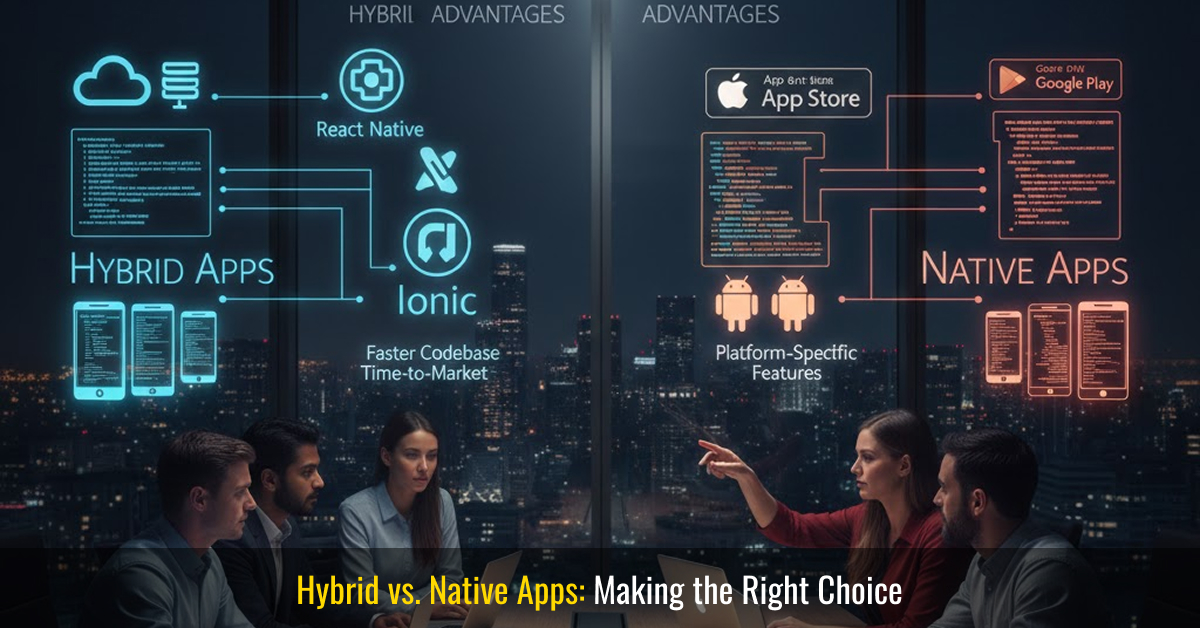
Understanding the differences between hybrid and native development is crucial for making an informed decision. While hybrid mobile app development services offer numerous advantages, native development remains the preferred choice for certain scenarios.
When to Choose Hybrid Development
Hybrid app development is ideal when:
- Budget constraints are significant
- Time-to-market is critical
- Your app focuses on content delivery, e-commerce, or business tools
- You need to reach both iOS and Android users simultaneously
- Your development team has web development expertise
- You’re building an MVP to validate market demand
When Native Development Makes More Sense
Consider native development if:
- Your app requires intensive graphics processing (3D games, AR/VR)
- Performance is absolutely critical
- You need deep integration with platform-specific features
- Your app handles real-time data processing or complex animations
- Budget allows for separate platform development
Performance Comparison
While native apps traditionally offered superior performance, modern hybrid frameworks have significantly narrowed this gap. React Native and Flutter, in particular, deliver performance that’s virtually indistinguishable from native apps for most use cases. The performance difference becomes noticeable primarily in graphics-intensive applications or those requiring complex animations and real-time processing.
Selecting a Hybrid Mobile Application Development Company
Choosing the right hybrid mobile application Development Company can make or break your project. The ideal development partner combines technical expertise, industry experience, and a proven track record of delivering successful hybrid applications.
Essential Evaluation Criteria
When assessing possible development collaborators, keep these essential elements in mind:
- Technical expertise: Verify proficiency in your chosen framework (React Native, Flutter, Ionic)
- Portfolio quality: Review their previous hybrid apps for design quality, functionality, and user reviews
- Industry experience: Seek developers familiar with your specific industry requirements
- Development process: Ensure they follow agile methodologies and maintain clear communication
- Post-launch support: Confirm availability for maintenance, updates, and scaling
- Security practices: Validate their approach to data security and compliance
Questions to Ask Potential Development Partners
During the selection process, ask these key questions:
- How many hybrid apps have you successfully launched?
- What frameworks do you specialize in, and why?
- Are there applicable case studies from our market that you can offer?
- What’s your typical project timeline and delivery process?
- How do you manage the app store submission and approval process?
- What post-launch support and maintenance packages do you offer?
- How do you ensure app security and data protection?
Red Flags to Watch For
Be cautious of development companies that:
- Promise unrealistically low costs or fast delivery times
- Lack a clear development methodology or communication process
- Cannot provide verifiable references or portfolio examples
- Show limited understanding of app store guidelines
- Offer vague or incomplete contracts without clear deliverables
The Hybrid App Development Process

Understanding the typical hybrid mobile app development workflow helps set realistic expectations and ensures smoother project execution. While specific processes may vary between development companies, most follow a similar framework.
Phase 1: Discovery and Planning
The foundation of successful app development begins with thorough planning. This phase involves defining your app’s purpose, target audience, core features, and business objectives. Development teams conduct competitive analysis, create user personas, and establish technical requirements. This stage typically takes 1-2 weeks and results in a comprehensive project roadmap and technical specification document.
Phase 2: UI/UX Design
Design teams create wireframes, prototypes, and final visual designs that align with your brand identity while following platform-specific design guidelines. The goal is to create an intuitive, engaging interface that provides excellent user experience across different screen sizes and platforms. This phase usually requires 2-4 weeks, depending on app complexity.
Phase 3: Development and Integration
Developers build the app’s functionality using the chosen framework, integrating necessary APIs, databases, and third-party services. This phase includes both frontend development (user interface) and backend development (server, database, APIs). Depending on feature complexity, development can take 8-16 weeks. Regular sprint reviews ensure the project stays aligned with requirements.
Phase 4: Testing and Quality Assurance
Comprehensive testing identifies and resolves bugs, performance issues, and usability problems. QA teams conduct functional testing, compatibility testing across devices, performance testing, security testing, and user acceptance testing. This critical phase typically requires 2-3 weeks and often runs parallel to late-stage development.
Phase 5: Deployment and Launch
The final phase involves preparing and submitting the app to the Apple App Store and Google Play Store. This includes creating app store listings, screenshots, descriptions, and meeting platform-specific requirements. App store approval can take 1-2 weeks. Post-launch, teams monitor performance metrics, user feedback, and crash reports to ensure smooth operation.
Cost Considerations for Hybrid App Development
Understanding the cost structure of hybrid app development services helps you budget effectively and avoid unexpected expenses. While hybrid development is generally more cost-effective than native development, several factors influence the final investment.
Factors Affecting Development Costs
- App complexity: Simple apps ($15,000-$50,000), moderate complexity ($50,000-$100,000), complex apps ($100,000+)
- Feature set: Each advanced feature (payment integration, real-time chat, AI) adds to costs
- Design sophistication: Custom animations and unique UI elements increase design time
- Backend infrastructure: Complex backend requirements significantly impact costs
- Third-party integrations: APIs, payment gateways, and analytics tools may require licensing fees
- Developer location: Rates vary significantly by region ($25-$250/hour)
Ongoing Maintenance Costs
Budget for ongoing expenses including server hosting ($50-$500/month), app store fees ($99/year for iOS, $25 one-time for Android), maintenance and updates (15-20% of initial development cost annually), security updates, and performance monitoring tools. These ongoing expenses keep your app working properly, protected, and relevant in the market.
Future Trends in Hybrid Mobile App Development
The landscape of hybrid app development continues to evolve rapidly, with emerging technologies and methodologies reshaping how developers approach cross-platform applications. Staying informed about these trends helps businesses make strategic decisions about their mobile app investments.
Artificial Intelligence and Machine Learning Integration
AI and ML are becoming increasingly accessible in hybrid apps through frameworks like TensorFlow Lite and ML Kit. These technologies enable personalized user experiences, predictive analytics, chatbots, image recognition, and natural language processing, all within cross-platform applications. Expect to see more hybrid apps leveraging AI for features like smart recommendations, voice assistants, and automated content moderation.
Progressive Web Apps (PWAs) and Hybrid Convergence
The line between PWAs and hybrid apps is blurring as frameworks like Ionic enable developers to create apps that function seamlessly across mobile, web, and desktop platforms. This convergence allows businesses to maintain a single codebase that serves users across all devices and platforms, further reducing development costs and complexity.
5G Technology Impact
The rollout of 5G networks enables hybrid apps to deliver experiences previously only possible with native development. Faster data speeds and lower latency support high-quality video streaming, augmented reality features, real-time collaboration, and cloud gaming, all within hybrid frameworks. This technological advancement narrows the performance gap between hybrid and native apps even further.
Internet of Things (IoT) Integration
As IoT devices proliferate, hybrid apps are increasingly serving as control centers for smart home devices, wearables, and industrial sensors. Cross-platform frameworks now offer robust libraries for Bluetooth, Wi-Fi, and other IoT communication protocols, enabling developers to create unified interfaces for device management across platforms.
Enhanced Security Features
Modern hybrid frameworks are incorporating advanced security features including biometric authentication, end-to-end encryption, secure storage solutions, and compliance with regulations like GDPR and CCPA. These built-in security capabilities make hybrid apps increasingly suitable for sensitive applications in healthcare, finance, and enterprise environments.
Common Challenges and How to Overcome Them
While hybrid mobile app development offers numerous advantages, it’s not without challenges. Understanding these potential obstacles and their solutions helps ensure successful project outcomes.
Performance Optimization
Challenge: Hybrid apps may experience performance issues with complex animations or data-intensive operations.
Solution: Implement code splitting, lazy loading, efficient state management, and optimize images and assets. Use native modules for performance-critical features. Regular performance profiling helps identify and address bottlenecks early.
Platform-Specific Issues
Challenge: Different behaviors and bugs may appear on iOS versus Android devices.
Solution: Conduct thorough testing on both platforms throughout development. Use platform-specific code when necessary, and maintain a comprehensive device testing matrix. Leverage conditional rendering and platform detection to handle platform differences gracefully.
Access to Latest Platform Features
Challenge: New iOS or Android features may not be immediately available in hybrid frameworks.
Solution: Choose frameworks with active development communities that quickly adopt new platform features. Consider creating custom native modules for cutting-edge functionality. Most popular frameworks now support new platform features within weeks of release.
Frequently Asked Questions About Hybrid Mobile App Development

What are hybrid mobile app development services?
Hybrid mobile app development services involve creating applications that work across multiple platforms (iOS, Android, web) using a single codebase. These services utilize frameworks like React Native, Flutter, or Ionic, which combine web technologies (HTML5, CSS, JavaScript) with native functionality. Development companies offering these services provide end-to-end solutions including design, development, testing, deployment, and ongoing maintenance, all optimized for cross-platform compatibility.
How do hybrid apps differ from native apps?
Native apps are built specifically for one platform using platform-specific languages (Swift for iOS, Kotlin for Android), offering optimal performance and full access to device features. Hybrid apps use a single codebase that works across multiple platforms, wrapped in a native container. While native apps traditionally offered better performance, modern hybrid frameworks have narrowed this gap significantly. Native apps require separate development teams for each platform, while hybrid apps need just one team, reducing costs by 50-60% and accelerating time-to-market.
What are the gains from cross-platform mobile app development?
Cross-platform mobile app development offers several compelling benefits:
(1) Cost savings of 50-60% compared to developing separate native apps.
(2) Faster development cycles and quicker time-to-market.
(3) Single codebase simplifies maintenance and updates.
(4) Wider audience reach across iOS, Android, and web platforms.
(5) Consistent user experience across all devices.
(6) Efficient resource utilization with one development team.
(7) Easier testing and quality assurance processes.
These advantages make cross-platform development particularly attractive for startups, MVPs, and businesses with limited budgets or tight deadlines.
Which frameworks are best for hybrid app development?
The top frameworks for hybrid app development in 2026 are:
(1) React Native – the most popular choice with near-native performance and extensive community support.
(2) Flutter – Google’s framework offering exceptional UI customization and fast development.
(3) Ionic – ideal for web developers using Angular, React, or Vue with strong PWA support.
(4) Xamarin – Microsoft’s solution perfect for .NET developers and enterprise environments.
The optimal decision hinges on your team’s skills, what your project demands, and how fast it needs to run. React Native and Flutter currently dominate the market due to their robust ecosystems and excellent performance.
How do I choose a hybrid mobile application development company?
When selecting a hybrid mobile application development company, evaluate:
(1) Technical expertise in your preferred framework and industry experience.
(2) Portfolio quality with verifiable case studies and client testimonials.
(3) Development process including agile methodologies and communication practices.
(4) Post-launch support and maintenance offerings.
(5) Security practices and compliance with data protection regulations.
(6) Transparent pricing with clear deliverables and timelines.
(7) Team composition and their availability throughout the project.
Request proposals from multiple companies, conduct thorough interviews, and always check references before making your final decision.
How much time is needed to develop a hybrid mobile app?
Development timelines for hybrid mobile apps vary based on complexity: Simple apps with basic features typically take 2-3 months, moderately complex apps with custom features require 3-6 months, and complex apps with advanced functionality may need 6-12 months. The process includes discovery and planning (1-2 weeks), UI/UX design (2-4 weeks), development (8-16 weeks), testing (2-3 weeks), and deployment (1-2 weeks). Hybrid development is typically 30-50% faster than native development because you’re building for multiple platforms simultaneously with a single codebase.
Do hybrid apps work well for every kind of application?
Hybrid apps excel for content-driven applications, e-commerce platforms, business tools, social networking apps, and most consumer-facing applications. They’re ideal when budget, time-to-market, and cross-platform reach are priorities. However, native development may be preferable for graphics-intensive applications (3D games, complex AR/VR), apps requiring intensive processing or real-time data manipulation, applications needing cutting-edge platform-specific features immediately upon release, or when optimal performance is absolutely critical. Modern frameworks like React Native and Flutter have significantly expanded the types of applications suitable for hybrid development.
What ongoing costs should I expect after launching a hybrid app?
After launching your hybrid app, budget for:
(1) Server and hosting costs ($50-$500/month depending on traffic).
(2) App store fees ($99/year for Apple, $25 one-time for Google).
(3) Maintenance and updates (typically 15-20% of initial development cost annually).
(4) Security patches and framework updates.
(5) Performance monitoring and analytics tools ($50-$300/month).
(6) Customer support infrastructure.
(7) Feature enhancements based on user feedback.
Some development companies offer maintenance packages that bundle these services at a fixed monthly rate.
Conclusion: Making the Right Choice for Your Business
Hybrid mobile app development services represent a compelling solution for businesses seeking to establish a strong mobile presence across multiple platforms. With the ability to reduce development costs by 50-60%, accelerate time-to-market, and reach over 99% of mobile users globally, hybrid development has become the preferred choice for companies of all sizes.
The key to success lies in careful planning, choosing the right framework for your specific needs, and partnering with an experienced development team. Whether you opt for React Native’s robust ecosystem, Flutter’s exceptional performance, Ionic’s web-friendly approach, or Xamarin’s enterprise capabilities, modern hybrid frameworks deliver near-native performance while maintaining code efficiency.
As mobile technology continues to evolve with AI integration, 5G connectivity, and IoT capabilities, cross-platform mobile app development is positioned to become even more powerful and versatile. By understanding the benefits, challenges, and best practices outlined in this guide, you’re well-equipped to make informed decisions about your mobile app development strategy.
Remember, the most successful hybrid apps result from clear vision, strategic planning, and collaboration with skilled development partners who understand both the technical requirements and business objectives. Whether you’re launching a startup MVP or expanding an enterprise product line, hybrid mobile app development offers a proven path to digital success in today’s multi-platform world.

